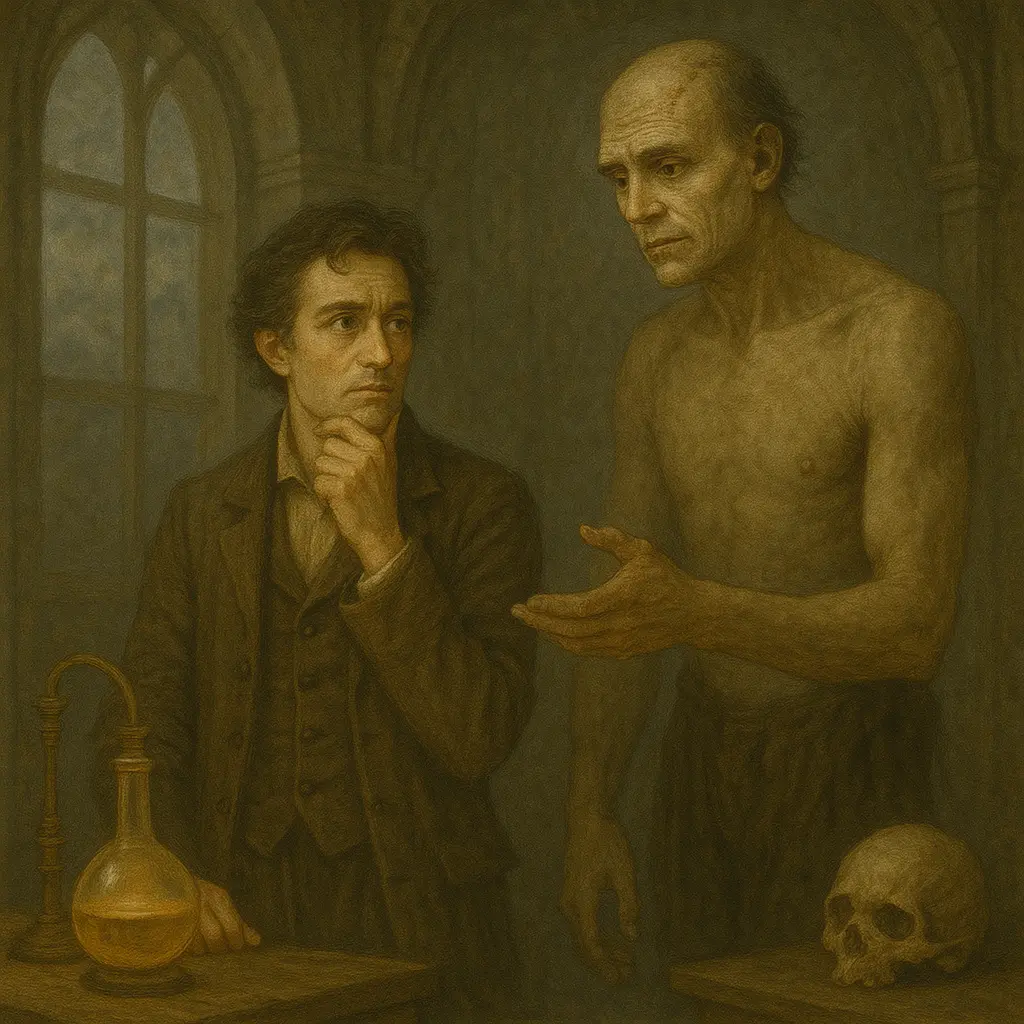
Context and Overview
Mary Shelley’s Frankenstein presents a dark and cautionary vision of human ambition, scientific progress, and the consequences of isolation. Written during the Romantic era, the novel explores the dangers of unchecked ambition and the ethical limits of scientific exploration. Shelley warns against a worldview that prioritises knowledge and power over compassion and connection, suggesting that a disregard for moral and social responsibilities leads to suffering. The general vision and viewpoint of Frankenstein are shaped by themes of isolation, the pursuit of knowledge, and the consequences of defying natural boundaries, offering a tragic perspective on humanity’s relationship with science and power.
Ambition and the Pursuit of Knowledge
The novel critiques the ambition to transcend human limitations through science. Victor’s relentless pursuit of knowledge leads to disastrous consequences, showing the danger of prioritising intellectual pursuits over moral considerations.
- Example and Quote
Victor expresses his ambition early in the novel: “Life and death appeared to me ideal bounds, which I should first break through, and pour a torrent of light into our dark world.” (Chapter 4). This line reveals his desire to conquer nature and attain god-like power. - Analysis
Victor’s ambition to surpass human limits reflects the novel’s dark vision of the pursuit of knowledge. Shelley critiques a society that glorifies ambition without considering the ethical implications, showing that unchecked intellectual pursuits can lead to personal ruin and widespread harm. The novel’s tragic viewpoint suggests that while ambition can inspire greatness, it can also lead to destruction if not guided by moral responsibility.
Isolation and Alienation
Both Victor and the Creature experience profound isolation, though for different reasons. Victor’s self-imposed isolation stems from his obsession with creating life, while the Creature’s alienation is forced upon him by society’s rejection. Shelley portrays isolation as destructive, leading to despair, violence, and a loss of humanity.
- Example and Quote
The Creature articulates his loneliness: “I am alone and miserable; man will not associate with me.” (Chapter 15). His despair highlights the pain of being rejected by society due to his appearance. - Analysis
The Creature’s alienation represents the dark side of societal judgment and the consequences of living without companionship or acceptance. Shelley’s vision warns of the dangers of societal rejection and the emotional cost of isolation. The viewpoint of the novel suggests that individuals, whether creators or creations, cannot thrive in isolation. Shelley thus critiques a society that judges based on appearance and reinforces the importance of empathy and inclusion.
Consequences of Defying Nature
Victor’s decision to create life violates natural laws and brings about tragic consequences. Shelley’s narrative emphasises the importance of respecting nature’s boundaries and the dangers of trying to control or alter life itself.
- Example and Quote
Victor’s regret becomes apparent when he reflects on his ambition: “Learn from me… how dangerous is the acquirement of knowledge and how much happier that man is who believes his native town to be the world.” (Chapter 4). His words highlight his remorse and the cautionary nature of his story. - Analysis
Victor’s warning reflects the novel’s overarching viewpoint on the dangers of manipulating nature. Shelley uses Victor’s downfall to illustrate the catastrophic results of defying natural boundaries, suggesting that humans must respect the limits set by nature. This bleak vision critiques a worldview that values scientific achievement over ethical responsibility, warning that such a perspective can lead to destruction.
Family, Love, and the Search for Belonging
The absence of family support and love contributes to the novel’s tragic outcomes. While Victor has a supportive family he neglects, the Creature is denied any family or companionship, leading him to violence and revenge.
- Example and Quote
The Creature laments his lack of companionship, pleading with Victor, “You must create a female for me with whom I can live in the interchange of those sympathies necessary for my being.” (Chapter 17). His request underscores his need for connection and acceptance. - Analysis
The Creature’s plea for companionship highlights the novel’s critique of isolation and the importance of love and support. Shelley suggests that family and connection are fundamental to one’s humanity, and that neglecting these bonds can lead to suffering and vengeance. The novel’s vision suggests that without a supportive community, individuals are left to despair, reinforcing the importance of family and compassion.
Responsibility and Ethical Limits
Frankenstein emphasises the responsibilities that come with scientific discovery, particularly the moral obligations of a creator towards their creation. Victor’s neglect of the Creature underscores his irresponsibility, leading to tragic outcomes for both characters.
- Example and Quote
Victor reflects on his responsibility, saying, “I had worked hard for nearly two years, for the sole purpose of infusing life into an inanimate body… but now that I had finished, the beauty of the dream vanished, and breathless horror and disgust filled my heart.” (Chapter 5). His immediate rejection of the Creature shows his failure to accept responsibility. - Analysis
Victor’s horror at his creation reflects the novel’s critical viewpoint on the ethical responsibilities of scientific creators. Shelley warns that those who pursue knowledge must also bear the moral weight of their actions. By abandoning the Creature, Victor fails as a creator, leading to disastrous consequences. The novel’s vision is cautionary, showing that neglecting ethical considerations in the pursuit of knowledge can result in unimaginable harm.
Conclusion
The general vision and viewpoint of Frankenstein is one of caution and tragedy, as Mary Shelley critiques the blind pursuit of knowledge, isolation, and the neglect of moral and social responsibilities. Through Victor’s ambition, the Creature’s alienation, and the consequences of defying nature, Shelley presents a dark perspective on the potential dangers of scientific progress without ethical consideration. The novel ultimately serves as a warning against a society that values intellectual achievement over compassion and humility, encouraging readers to consider the ethical boundaries that must accompany progress. Shelley’s vision reinforces the need for balance, suggesting that scientific ambition must be tempered by empathy, responsibility, and respect for natural limits.